How to Clean Leafy Greens Before Eating Them Raw: A Step-by-Step Guide to Staying Safe
Eating fresh leafy greens is one of the healthiest habits you can build. Spinach, lettuce, kale, arugula, coriander, and parsley are packed with vitamins, minerals, and antioxidants. But when you eat them raw, there is one important thing you cannot ignore: they can carry dirt, bacteria, pesticide residue, and sometimes parasites from the farm, transport, or handling process.
That does not mean you should stop eating raw greens. It means you should learn the right way to clean them so you can enjoy them safely at home. In this guide, I’ll walk you through exactly what to do, step by step, in a way that is simple, practical, and easy to follow.
Why raw greens need extra care
Leafy greens grow close to the ground, which makes them more exposed to soil, water contamination, and microorganisms. Even pre-washed greens are not always completely risk-free, especially if they are later handled in an unclean kitchen or stored incorrectly.
The biggest risks are usually:
- Dirt and sand stuck between leaves.
- Bacteria from soil, water, or handling.
- Pesticide residue on the surface.
- Rarely, parasites or parasite eggs from contaminated produce.
The good news is that proper washing, drying, and storage can greatly reduce these risks.
Step 1: Start with clean hands and a clean workspace
Before touching any greens, wash your hands with soap and water for at least 20 seconds. Clean your countertop, sink, cutting board, knife, and colander so you are not transferring germs from dirty surfaces to the vegetables.
This step matters more than people think. If your sink or tools are dirty, you can contaminate the greens while trying to clean them. So before anything else, make the kitchen ready first.
Step 2: Sort the greens before washing
Look through the leaves carefully and remove anything that looks wilted, bruised, slimy, or damaged. These pieces are more likely to hold dirt and microbes, and they can spoil the rest of the batch faster.
If you are cleaning lettuce with a core, like iceberg, remove the core so the leaves separate more easily. For curly greens like kale or collards, pull the leaves apart so water can reach all the folds.
A quick sorting step saves time later and makes the cleaning much more effective.
Step 3: Rinse under cool running water
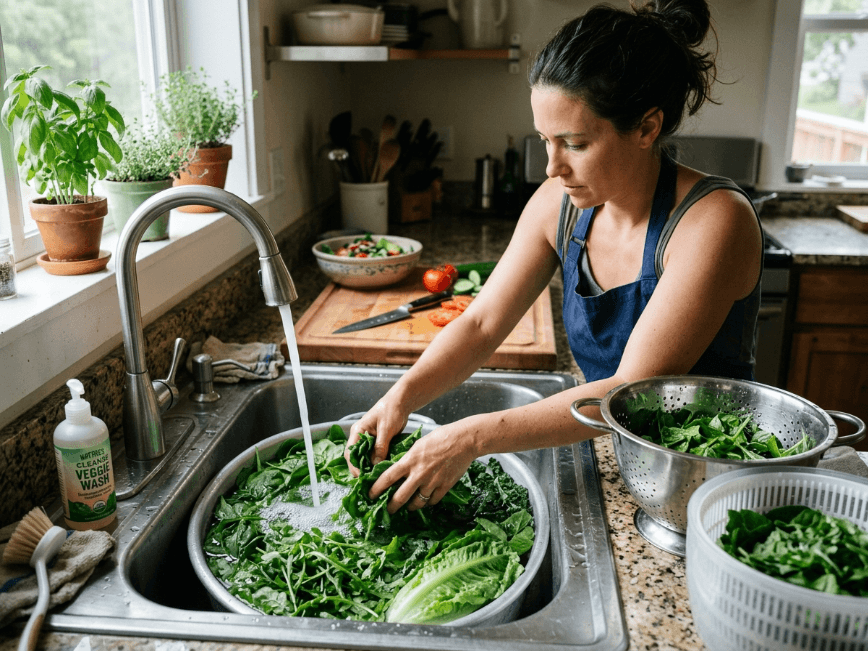
For most leafy greens, the safest and simplest method is to rinse them under cool running water. Gently rub the leaves with your fingers as the water flows over them, especially along the ribs, folds, and edges where dirt hides.health+2
Do not use hot water, because it can damage the texture and make the leaves wilt faster. Cool water helps maintain freshness while still removing a large amount of surface debris.health+1
If the greens are loose, place them in a colander and rinse them thoroughly from all sides. If they are more delicate, rinse leaf by leaf so you do not bruise them.
Step 4: Use a second rinse if needed
If the greens are very dirty, it is smart to rinse them again after the first wash. Some experts recommend a second rinse to help remove extra residue, especially for greens that were grown in sandy soil or handled a lot before reaching your kitchen.
This is not about overcomplicating the process. It is about making sure the leaves are actually clean before they go on your plate or into your smoothie.
Step 5: Dry the greens properly
After washing, dry the leaves as much as possible using a salad spinner, clean kitchen towel, or paper towels. This step is important because excess moisture can speed up bacterial growth and make the greens wilt sooner.
If you plan to eat them raw, dry greens also taste better and hold salad dressing more evenly. If you are storing them, drying becomes even more important because wet leaves spoil faster in the fridge.
Step 6: Store them the right way
Do not wash leafy greens too early if you are planning to store them for later. Moisture left on the leaves can reduce shelf life and encourage bacterial growth.
The best method is:
- Wash only when needed.
- Dry thoroughly.
- Store in a clean container or bag.
- Keep them refrigerated.
- Add a paper towel in the container to absorb extra moisture.
- his small habit can make your greens last longer and stay fresher.
Extra cleaning methods: what works and what does not
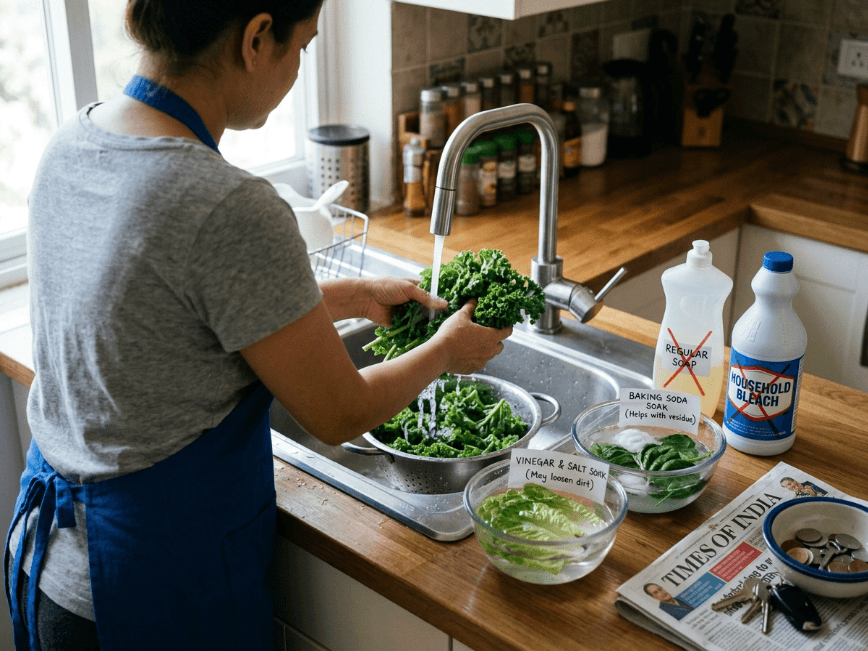
Some people use vinegar, salt, baking soda, or other soaking methods. These methods may help loosen residue or dirt, but they should not replace a proper rinse under cool running water.
A few important notes:
- Vinegar and salt can be used by some people, but they are not magic solutions.
- Baking soda may help with certain residues, but you still need to rinse very well.
- Soap, bleach, and commercial household cleaners should not be used on leafy greens.
If you choose to soak greens, always finish with a clean rinse and thorough drying.
What about parasites?
Parasites on vegetables are less common than dirt or bacteria, but they can happen if produce is contaminated during growing, watering, or handling. Because of that, raw greens should always be washed carefully, and cooking is the safest option when you want maximum protection.
Heat is powerful against many parasites. That means lightly cooked greens, soups, or sautéed vegetables are generally lower risk than raw salads.
For people with weakened immune systems, extra caution is especially important. In those cases, choosing cooked greens instead of raw may be the safer choice.
Best way to wash different leafy greens
Not all greens are cleaned the same way. Use the method that matches the type of leaf:
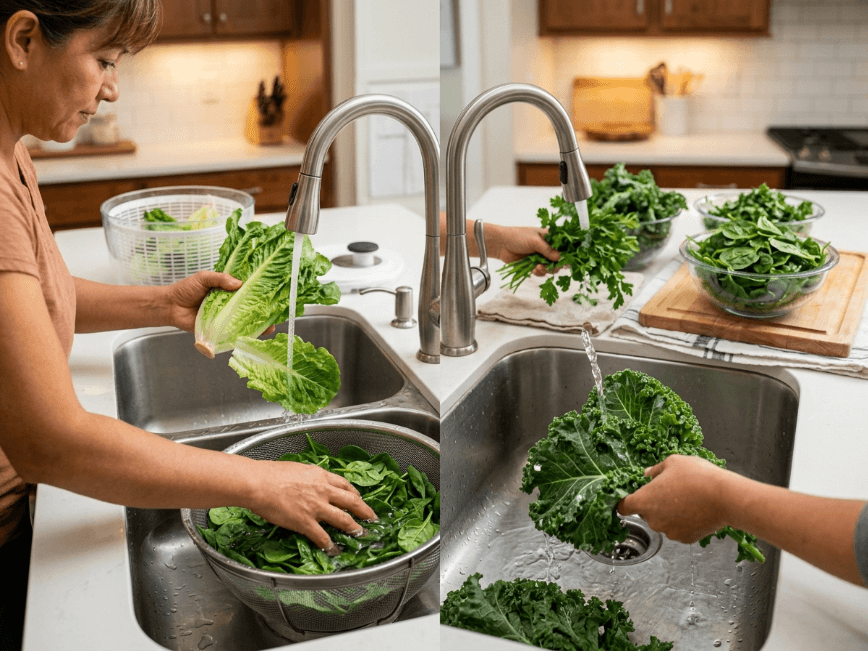
- Lettuce: Remove the outer leaves, separate the head, rinse leaf by leaf, then dry well.
- Spinach: Rinse gently in cool water, swirl carefully if needed, then dry without crushing the leaves.
- Kale: Pull apart the leaves and rinse each one carefully because dirt often hides in the folds.
- Herbs like parsley or coriander: Swish them gently under cool running water, then shake and dry.
The goal is always the same: remove visible dirt, reduce contamination, and keep the leaves intact.
Common mistakes to avoid
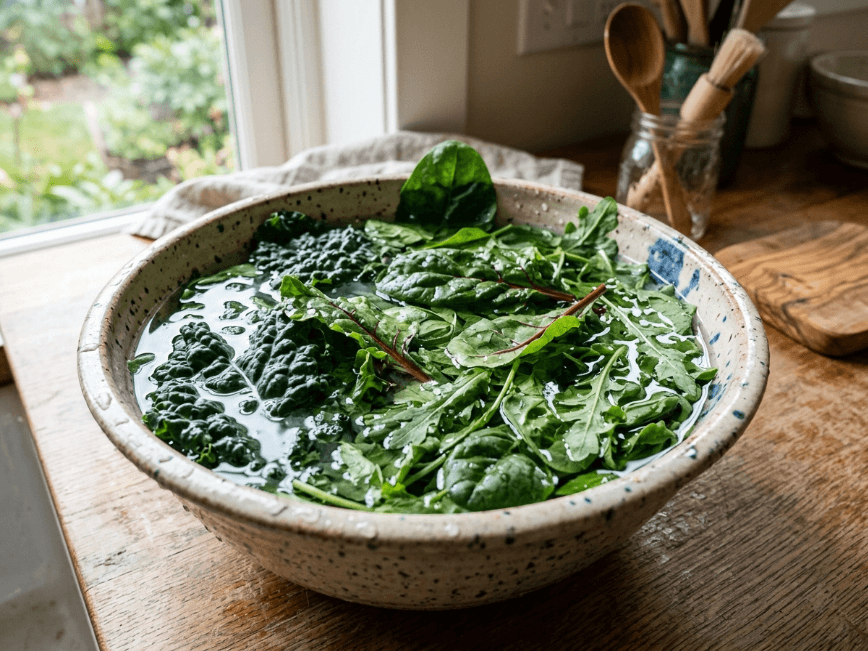
A lot of people think they are cleaning greens properly, but they make small mistakes that reduce safety. Avoid these:
- Washing with dirty hands or in a dirty sink.
- Soaking greens in stagnant water for too long.
- Using soap or bleach.
- Storing wet greens in the fridge.
- Ignoring damaged or slimy leaves.
- Assuming “pre-washed” means no cleaning is needed at all.
Pre-washed greens can still benefit from careful handling in a clean kitchen.
Final safety checklist
Before eating raw leafy greens, make sure you have done this:
- Wash your hands.
- Clean your sink and tools.
- Remove damaged leaves.
- Rinse under cool running water.
- Gently rub each leaf.
- Rinse again if needed.
- Dry completely.
- Store properly in the fridge.
This simple routine takes only a few minutes, but it can make a real difference in food safety.
Conclusion
Raw leafy greens are healthy, fresh, and easy to add to meals, but they should always be cleaned properly before eating. The safest approach is simple: use clean hands, rinse under cool running water, dry thoroughly, and store them well.
If you want the lowest risk possible, cooking is safer than eating greens raw because heat helps destroy many harmful organisms, including some parasites.