Your fridge is supposed to keep food safe, but it can also hide items that quietly become risky, useless, or even harmful over time. Some foods stay in the refrigerator far longer than they should, while others look fine but have already gone bad in ways people do not notice quickly.
If you want a cleaner, safer kitchen, start with the three items people most often forget to remove: expired leftovers, spoiled sauces and condiments, and old raw food packaging or opened items that have gone unsafe. These are the fridge problems that usually create bad smells, cross-contamination, and unnecessary food waste.
Why fridge cleanup matters
Many people think refrigeration solves everything, but cold storage only slows spoilage. It does not stop it completely. Food can still grow unsafe bacteria, lose quality, or transfer odor and moisture to other items in the fridge.
A cluttered fridge also makes it harder to see what is fresh and what is not. That leads to forgotten items sitting in the back for weeks, which increases the chance of eating something that should have been discarded earlier.
1. Old leftovers
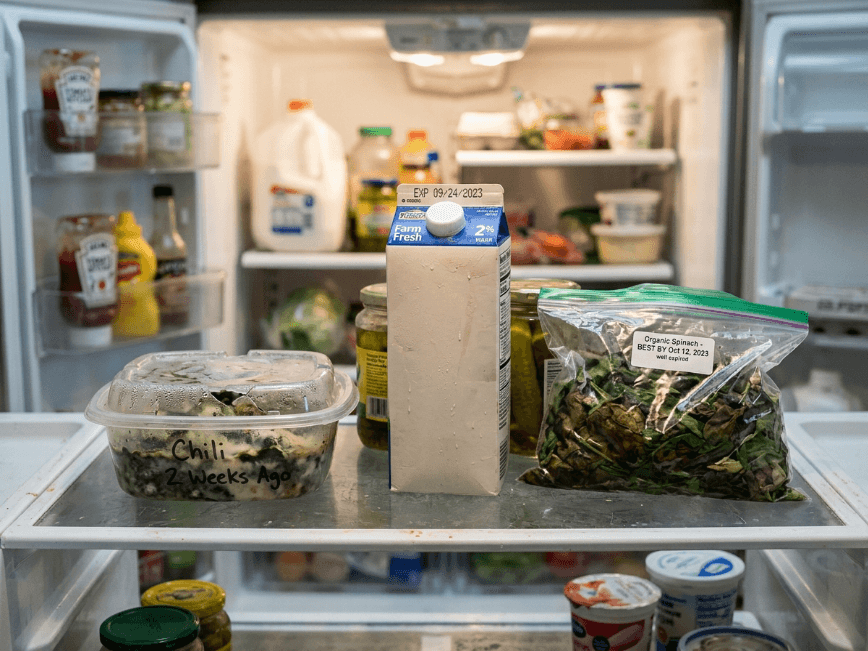
The first thing to remove is any leftover food that has been sitting too long. This includes cooked rice, pasta, meat, soups, stews, and takeout containers that have been opened and ignored. Even if leftovers still smell acceptable, they can become unsafe after several days and should not be trusted just because they look normal.
A good rule is to throw away anything you cannot clearly identify or anything you know has been in the fridge for far too long. If you forgot when it was cooked, that is already a warning sign.
How to handle leftovers properly
- Check every container in the back of the fridge.
- Open each one and look for smell, texture, and visible mold.
- If the food is slimy, sour, dry in a strange way, or unrecognizable, discard it.
- Wash the container before reusing it.
If you do not remember when the food was made, the safest choice is usually to throw it out. That is better than risking food poisoning from something you were unsure about.
2. Spoiled sauces and condiments
The second thing to remove is any sauce, dip, spread, or condiment that has gone bad. People often keep half-used mayonnaise, salad dressing, ketchup, hummus, garlic sauce, yogurt-based dips, and homemade sauces long after they should be discarded. These items can collect bacteria from dirty spoons, repeated opening, or improper storage.
Sauces are tricky because they may not always look spoiled at first. But if they have separation, an off smell, mold around the lid, or a strange taste, they should go straight into the trash.
Signs a sauce should be removed:
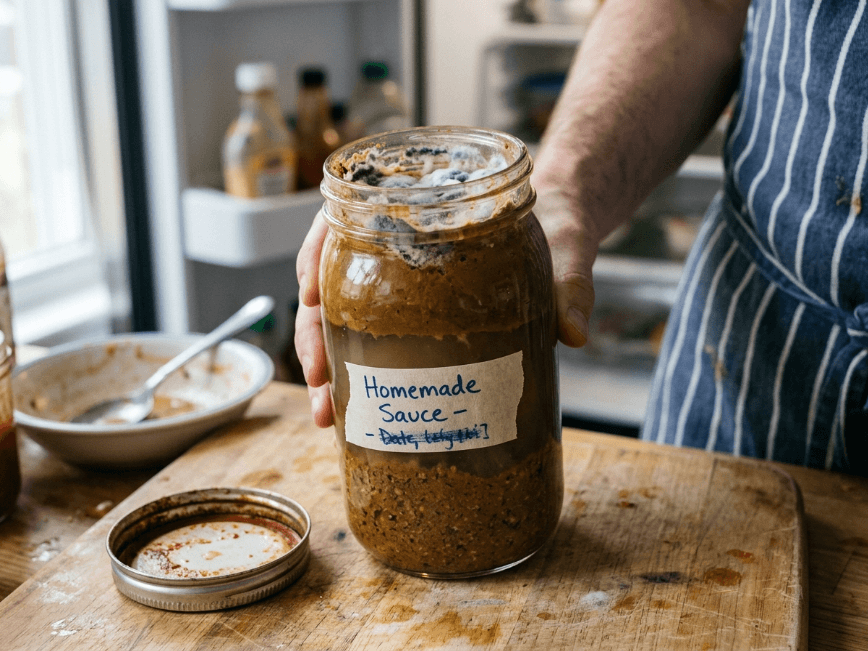
- Mold on the top, lid, or rim.
- Sour, fermented, or unusual smell.
- Strange color change.
- Thick separation that does not mix back properly.
- Expired date with obvious quality loss.
For homemade sauces, the clock usually runs faster than people expect. If you made it yourself and do not remember how long it has been sitting there, it is safer to remove it than to keep guessing.
3. Unsafe opened raw items and forgotten packaging
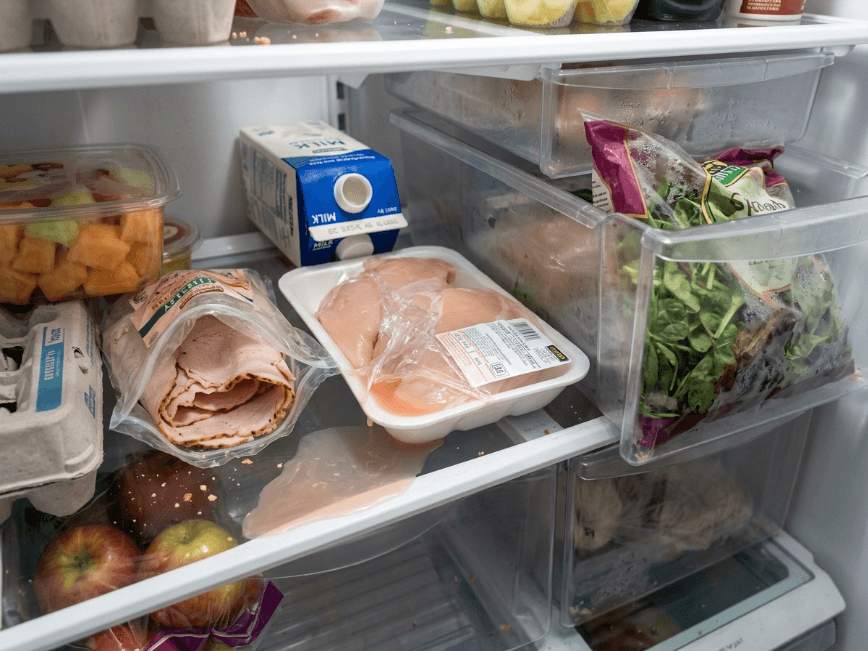
The third thing to remove is any opened raw food or packaged item that has clearly passed its safe storage window. This includes opened deli meat, raw chicken packaging, fish containers, cut fruit, salad bags, and dairy items that are past their freshness period. Even when the fridge stays cold, these foods can still become unsafe if they are opened and left too long.
Packaging matters too. If raw meat juices leaked into the drawer or onto other foods, that is a contamination problem, not just a cleanup issue. In that case, the affected item should be thrown away and the area cleaned immediately.
What to check
- Opened meat or fish packages.
- Leaking containers.
- Expired milk, cream, or yogurt.
- Bagged salad with slimy leaves.
- Fruit with mold or soft rotten spots.
If one item has leaked onto another, do not try to save the contaminated food. Cross-contamination can spread bacteria very quickly inside a crowded fridge.
Step-by-step fridge cleanup routine
If you want a simple cleanup method, follow this order:
- Turn off distractions and empty the shelves one section at a time.
- Sort everything into keep, clean, and throw away.
- Remove old leftovers first.
- Remove spoiled sauces and condiments.
- Remove unsafe raw items and leaking packaging.
- Wipe shelves with warm water and mild soap.
- Dry the shelves completely before putting food back.
- Group similar foods together so the fridge stays organized.
This routine makes the process faster and easier, and it also helps you notice what you are really keeping in your fridge.
How to know if food is still safe
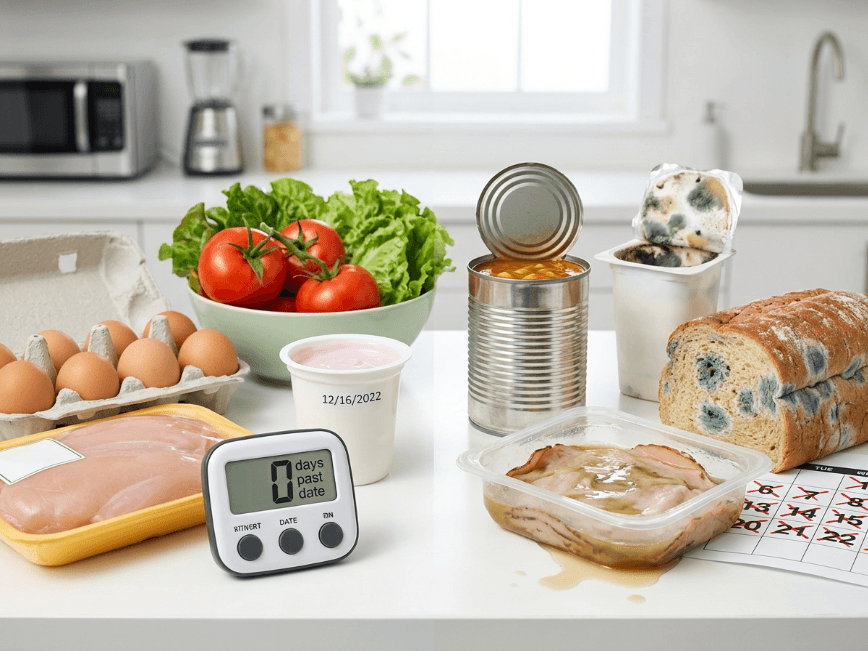
A lot of people rely only on smell, but smell is not enough. Some unsafe foods look and smell okay at first, while others become obviously spoiled. The safest approach is to use smell, appearance, storage time, and packaging condition together.
If food is bulging, leaking, moldy, slimy, or outside a safe storage window, it should be discarded immediately. When in doubt, throwing it away is usually the smarter option.
Fridge habits that prevent waste
The best fridge cleanup is the one you do not need to repeat too often. A few small habits can stop food from piling up and going bad in the first place.
- Keep older food in front so you use it first.
- Label leftovers with the date.
- Clean one shelf every week.
- Do not store half-empty containers for too long.
- Check sauces and condiments monthly.
- Keep raw food sealed and separate from ready-to-eat food.
These habits save money, reduce bad smells, and make your kitchen much easier to manage.
FAQ
How often should I clean my fridge?
A light fridge check once a week is ideal, while a deeper clean once a month helps you catch expired food before it becomes a problem.
Can I keep leftovers for a week?
It depends on the food, how it was stored, and whether it still looks and smells normal, but if you are unsure, it is better to throw it out.
Is mold on one part of food always a problem?
Yes, for many soft foods like sauces, bread, fruit, and leftovers, mold usually means the whole item should be discarded.
Should I trust expiration dates only?
No, expiration or best-before dates help, but you should also check smell, texture, appearance, and how long the food has been open.
What is the most dangerous thing in a messy fridge?
Usually it is a combination of old leftovers, leaking raw food, and spoiled dairy or sauces because these can contaminate other items nearby.
Final takeaway
If your fridge is holding old leftovers, spoiled sauces, and unsafe opened raw items, it is time to clear them out now. A clean fridge is not just about organization; it is about keeping your food safer, fresher, and easier to manage.